Showing posts with label Nature. Show all posts

Tuesday, May 07, 2013

Indigo Bunting

I took a lunch break to enjoy some of this Beautiful Day outdoors.  This Indigo bunting was visiting the pond this afternoon


Tuesday, September 13, 2011

Tuesday, August 02, 2011

Backyard Visitors


We have 4 of these guys frequenting our backyard. They have had a nest this spring and last. We are worried they will eat our fish.

Sunday, June 12, 2011

look whats lurking in the Garden


This guy hung around the front yard all afternoon. Looks like he has something in his belly.
we think he is a black rat snake.

Tuesday, June 22, 2010

Butterfly MilkWeed Attracts Beautiful Butterflies


I started with a variety of milkweed that is white called 'Ice Ballet'. I have a nice sized patch of the white flowers blooming now; but I am sure This mauve colored one must be a seedling from the white variety. It is very beautiful and is a butterfly magnet.

This plant is a favorite to monarch butterflies as well as others. The ones that I have attracted are the Great Spangled Fritillary Speyeria cybele, i think.

Here is some info about this plant:


Asclepias incarnata, with common names such as: Swamp Milkweed, Rose Milkweed, Swamp Silkweed, and White Indian Hemp, is a herbaceous, perennial plant species native to North America. It is found growing in damp to wet soils and also is cultivated as a garden plant for its attractive flowers, which are visited by butterflies and other pollinators due to its copious production of nectar. Like most other milkweeds, it has sap containing toxic chemicals, a characteristic that repels insects and herbivorous animals.

Swamp milkweed prefers moisture retentive to damp soils in full sun to partial shade and typically, is found growing wild near the edges of ponds, lakes, streams, and low areas—or along ditches. It is one of the best attractors of the Monarch Butterfly, which feeds on the flowers and lays her eggs on the plants. The emerging caterpillars feed on the leaves.

The plants have specialized roots for living in heavy wet soils. The scented, thick, white roots are adapted to live in environments low in oxygen. Blooming occurs in mid to late summer and after blooming; long, relatively thin, rounded, pods are produced that grow uprightly. The pods split open in late summer to late fall, releasing seeds that are attached to silky hairs, which act as parachutes that carry the seeds on the currents of the wind.

This species is cultivated frequently and a number of cultivars are available. They are used especially in gardens designed to attract butterflies. The nectar of the plant attracts many other species of butterflies and insects as well. The plants are also sold as freshly cut flowers, mostly for their long-lasting flower display, but sometimes, for the distinctive seed pods.

Monday, February 01, 2010

Enjoying Back yard Birds


GREAT BACKYARD BIRD COUNT

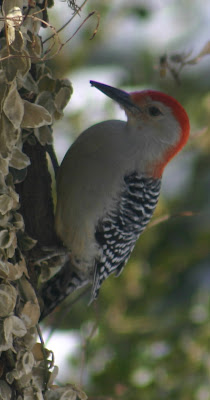
This weekend our yard was full of flocks of Robins- a sign perhaps that spring will be here some day. There have also been many woodpeckers and flickers visiting.

Across North America, thousands of people of all ages and backgrounds are contributing to the study of birds through the Cornell Lab of Ornithology’s citizen-science programs. Participants and scientists have joined in a powerful partnership to gather and synthesize information to better understand and protect birds and their habitats.


You too can help by taking part in the annual Great Backyard Bird Count, February 12 - 15. This citizen scientist project compiles bird counts from across the continent to create a winter snapshot of bird populations. You decide how long to watch during one or all of the four count days. Enter your data on-line, then view maps, graphs, and summaries, and find out what scientists are learning from the results.


There is no registration or fee. For more information go to


http://www.birdsource.org/gbbc/howto.html


COURTSHIP FACTS

February is the month for lovers and, even though it is still winter, many birds are already beginning their mating rituals.


Brightly colored songbirds apparently rely more upon their bright plumage to attract female mates as their displays are much more subtle than birds with less coloring.


Female woodpeckers are attracted to males that make loud drumming noises -- the louder the better.


Female birds require one-third more food than normal during the mating season to form their eggs. This often comes courtesy of the male. Many species can be observed “mate feeding” or “courtship feeding”. Be sure to keep your feeders filled during the spring months as natural food is in short supply during this time of the year.


If the male of a species has coloration that is distinctively different from the female’s, the male is much less likely to share equally in nest building, incubation and care of the young. Brightly colored males could endanger their young by drawing attention to them. The cardinal is one exception to this as the male often cares for the first brood of nestlings while the female lays and incubates a second clutch.


Male birds rarely build nests, except as part of a courtship display. Female birds do most of the real nest building.


Cold or dry weather can retard the sexual responsiveness of birds but rainy weather doesn’t seem to have any effect on them.


Red-tailed hawks are often seen in pairs this time of year. The pairs will sometimes fly spiraling higher and higher, then lock talons and come spinning back towards the ground in a strange sort of mating dance.


Owls can be heard calling back and forth. If you hear an owl calling, listen to see if you can hear another owl a distance away. Great horned owls are one of our earliest nesters and are already sitting on eggs.


“Go to the winter woods: listen there, look, watch, and the ‘dead months’ will give you a subtler secret than any you have yet found in the forest”

--Fiona Maclead (1855-1905), English writer


Information from the backyard chatter newsletter

Thursday, December 10, 2009

Making: Christmas Potpourri


Potpourri is easy to make.

You can use about any natural dried materials and essential oils to create a beautiful and fragrant mix.

Here is what I used:
Fresh balsam sprigs
Fresh Juniper Sprigs with berries
Pine cones
sweet gum pods
small oak leaves
1 cup dried rose petals
1 cup dried lavender
1/4 cup bay leaves
1/2 whole cloves
cinnamon sticks
1/2 cup dried mint
1/2 cup dried rosemary
1 cup dried chamomile flowers
1/2 cup dried lemon grass
cardamon pods
star anise
3 lemons sliced and dried
3 limes sliced and dried
essential oils:
10 drops each
rosewood
Fir Needle
Sweet orange
cinnamon leaf
cassia
Bay
Juniper Berries


Combine all dry ingredients in a large ceramic bowl or a large brown grocery sack. In a glass jar, combine the essential oils. Stir the two together and place in a container. Stir occasionally for the next few days to weeks. Place in a dish and arrange the more attractive ingredients on top such as the cinnamon sticks, pine cones, and the greenery.


How to dry the citrus slices:

I first dried the lemon and lime slices in the microwave first and then finished drying them in a low oven for a couple of hours.

Microwave drying:

1. Slice the lemon and limes into 1/4 inch slices

2. Line glass pie plates with at least 4 layers of paper towels.

3. place citrus slices in an even layer on top of the paper towels and then cover them with 4 more layers of paper towels.

4. Microwave at 50 percent power for 3 minutes. Turn fruit over and place on dry areas of paper towels. Cover with dry paper towels and microwave again at 50 percent power for 3 minutes. Repeat this process 1 more time for a total of 9 minutes of microwave drying.

I then finished drying the fruit in a low oven 200 for a couple of hours on baking sheets. Turning the fruit a few times.

Thursday, December 03, 2009

It Feels Like Winter Today


I Heard a Bird Sing

I heard a bird sing
In the dark of December
A magical thing
And sweet to remember:
"We are nearer to Spring
Than we were in September,"
I heard a bird sing
In the dark of December.

Oliver Herford

Monday, November 16, 2009

Backyard Visitors


We had 2 young bucks visit the pond this morning- I think they are beautiful but I do not enjoy watching them eat the plants and shrubs. They are fairly tame and do not scare very easily; they just stood and watched me through the dining room window as I took this photo.

Tuesday, August 18, 2009

Look what the Boys discovered this morning: A fishing spider and it's spiderlings


I think the spider we found this morning belongs to a group of spiders called Dolomedes or as “fishing spiders”? As the name suggests, this genus of spiders is usually found on or near water, “fishing” for aquatic prey, or other creatures attracted to the water’s edge. Typical prey might include water striders, small minnows and even tadpoles. They may be found clinging to a rock, piece of wood, or vegetation, with several legs resting lightly on the water’s surface. They wait patiently, sensing the approach of prey through the movement of the water. When something comes within striking distance, they make their move, seizing their prey, and even diving below the water’s surface in pursuit.

The Ball of baby spiders that we found near the Giant Mother is called Spiderlings.

Dolomedes spiders belong the to Family Pisauridae, commonly known as the Nursery Web spiders. They are referred to as such because the females construct a spherical egg sac and carry it in their jaws (chelicerae) until close to the spiderlings’ time of hatching. Then, they place the sac inside of a nursery web of silk strands secured to vegetation, and remain on guard close by. After hatching, the young spiderlings remain in the nursery for a time, occasionally moving away from each other, but quickly reforming into a ball when disturbed. We watched the ball of spiderlings move around when we gently moved the plant it was attached to. It was fun to watch and we could not believe how many babies there were.

Wednesday, April 22, 2009

Look what we have nesting in our back yard


We have a pair of these big birds nesting right outside out dining room window. We actually watched this one swoop down and eat a frog from our pond from our window. It was very interesting and the boys have had fun trying to identify exactly what kind of a hawk it is.

Monday, March 02, 2009

The first robin, the first bluebird, the first song sparrow…is an event which we mention to our neighbor, or write in our letters to our friends.

They bring us once more the assurance of the unfailing return of spring, and the never-ending joy and fecundity of life.”

--John Burroughs

There were so many birds visiting our yard today. I saw many robins, cedar waxwings, blue birds, red bellied woodpeckers, flickers, downy woodpeckers and so many others. The robins and cedar waxwings were eating juniper berries. I took all these photos this afternoon from inside.


Friday, February 27, 2009

Praying Mantis Egg Case


I took a photo of this on Tuesday while trimming branched at one of the master garden sites. I saw many that day attached to tree branches. I was excited to learn that these little bundles are the egg cases of Praying Mantis. Each one is the home to hundreds of potential praying mantis that could hatch when the weather warms up and live in the garden. These are great insects to have. later I looked around our garden, but did not find any.

Here is some more info about them:


Tenodera sinensis)

Adult Praying mantis are beautiful insects with a voracious appetite, and a delight to have in the garden. Being strictly carnivorous, they'll eat almost any insect of a size they can overcome. Waiting in quiet ambush for hours at a time, when an insect comes wandering by they suddenly jump out and attack - always biting the neck first. At rest, they seem to be "praying", holding their "hands" together.

Each praying mantis egg case will hatch about 100-200 tiny mantises, all at once. In order to hatch they'll need several weeks of warm weather, so they can "sense" that summer (and pest insects for food) has arrived. Eggs Can Be Hatched In A Paper Sack Attach the egg cases to a twig or plant about a foot or two off the ground where there's cover to protect the babies. When hatching, the young crawl from between tiny flaps in the cases and hang from silken threads about 2" below the case. After drying out, the long-legged young disperse into the vegetation leaving no evidence of their appearance. This happens within an hour or two, and it's very difficult to know hatching has occurred unless the elusive, well camouflaged young are found. (The egg case does not change appearance in any way.) If you'd like to see when the mantis have hatched, place the egg cases in a paper bag, fold the top and seal shut with a paper clip or clothes pin. Place Or Hatch Mantis Eggs Among Plant Foliage. PLace bag on a window sill in direct sunlight. Periodically open the bag carefully, and when you see tiny mantis running around inside, take them outside and sprinkle them throughout the garden. Be patient - sometimes it takes up to eight weeks of warm weather for them to hatch.

Once hatched, praying mantis begin feeding on small insects, such as aphids. Later on, they'll continue advancing up to larger and larger prey. By summer's end, praying mantis can reach several inches in length. In the fall, females produce more eggs, deposited in a frothy secretion that hardens to protect the eggs from predators and severe winter climates. Egg cases are attached to twigs, leaves, fences, etc. Several egg cases may be laid before cold winter finally sets in. This new generation of praying mantis will hatch when warm weather returns, to repeat the process.

You May also like

Related Posts with Thumbnails